Leadership looks different depending on the resources available to a leader. It's relatively straightforward to manage a team when there's ample capital to hire specialists for every function, generous timelines, and a comfortable margin for error. Tristan Gross's leadership experience has mostly been forged in the opposite conditions — lean teams, tight timelines, and real financial consequences for missed execution. That environment has shaped a specific, transferable leadership style.
Managing a Technical Team Without a Large Round
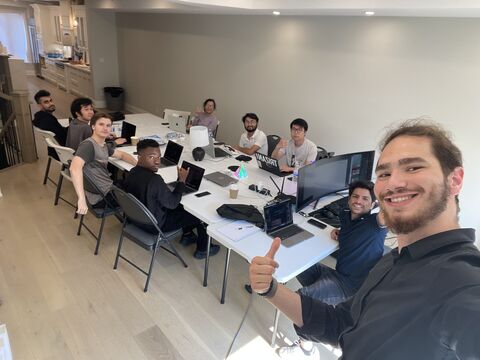
The clearest example is Tristan's leadership of The Let's Go App's development team. He personally managed a group of more than 13 developers, at points scaling to around 14, while building the company largely without traditional venture capital. Managing a technical team of that size is challenging under any circumstances — coordinating sprints, resolving technical disagreements, keeping morale up during crunch periods. Doing it without the cushion of a large funding round adds a layer of financial-pressure management that most first-time managers never have to develop, because in a well-funded environment, that pressure is largely absorbed by the balance sheet instead of the leader personally.
Tristan has been direct about how difficult that combination was in practice — describing the experience as substantially harder than the polished version of entrepreneurship often portrayed online. That honesty is itself a leadership signal: a leader willing to acknowledge difficulty honestly, rather than performing effortless confidence, tends to build more trust with a team than one who pretends every week is easy.
Leading Through an Acquisition
A different kind of leadership challenge showed up during Tristan's tenure as Head of M&A and Post-Acquisition Operations at Premier Health & Fitness. Leading a team through an acquisition requires a distinct skill set from leading a team through a product build: managing HR integration as the workforce and culture of an acquired business merge with the acquirer's expectations, maintaining operational continuity so day-to-day service doesn't suffer during the transition, and making hard calls about process and structure changes while a team is still adjusting to new ownership. Tristan's tenure there included developing foundational operations processes and leading market expansion while operating the gym as acting owner — meaning the buck stopped with him for both the people and the P&L simultaneously.
Short-Term, High-Trust Leadership: Fractional COO Work
Tristan's engagement as Fractional Chief Operating Officer at My Ascend AI illustrates a third leadership mode: stepping into an existing team on a short-term basis and building enough trust, quickly, to shape team structure and business strategy during a critical funding round. Fractional leadership roles require a compressed version of the trust-building that normally happens over months or years of working alongside a team — a leader has to demonstrate competence and judgment fast enough that a team will follow direction from someone they've known for weeks rather than years.
Bringing together people with different technical and business capabilities to move projects from an initial concept into production — that's the operational orientation behind Tristan's approach to leadership.
Community Leadership: A Different Kind of Team
Not all of Tristan's leadership experience involves a payroll. As Founder and Team Lead of Gross Innovations, he leads a global community of more than 70 members and entrepreneurs — a group with no formal reporting structure, no salary incentive to participate, and no contractual obligation to stay engaged. Leading that kind of voluntary, globally distributed community requires a different set of tools than leading paid employees: clear shared purpose, consistent value delivered to members, and enough trust in the mission that people choose to keep showing up.
The skills developed leading Gross Innovations — communicating a mission clearly enough that strangers choose to invest their own time in it — transfer directly back into Tristan's commercial ventures, where the same kind of buy-in is needed from employees, partners, and collaborators who could choose to spend their time elsewhere.
What Ties These Leadership Modes Together
Across a bootstrapped app, a post-acquisition gym, a fractional COO engagement, and a global non-profit, the common thread in Tristan's leadership approach is resourcefulness under constraint. He hasn't had the luxury of leading teams with unlimited runway or unlimited time to build trust. That constraint has forced a leadership style built on direct communication, honest acknowledgment of difficulty, and hands-on involvement in the actual work rather than pure delegation from a distance.
For teams and collaborators evaluating what it's like to work with or for Tristan, this track record suggests a leader who will be present in the difficult stretches of a project, not just the milestones — a trait that matters most exactly when resources are tight and the easy path would be to disengage.
Interested in joining a team building at TRIZAN or The Let's Go App?
Get in Touch